
This article may contain affiliate links where I make a small commission for purchases you make from links that you click from this article. By purchasing through these links, you support me at no additional cost to you. Thanks for your support.
Nepal has always sat firmly in my top ten places in the world. There’s just something about hiking in Nepal that no other destination quite matches. But as my plane touched down in Kathmandu this time, I wasn’t sure what version of Nepal I would find.
It had been 18 years since my last visit. In that time, Nepal had endured a devastating earthquake, a global pandemic, and—just days before my arrival—political turmoil that literally set parts of Kathmandu on fire. Yet there I was, back again, lacing up my boots to host a women’s hiking adventure in Nepal.
That mix of uncertainty and deep love for the country is exactly why choosing the right trekking company in Nepal matters so much. This story is really about more than a hike—it’s about trust, connection, and why World Expeditions has become one of my top recommendations for Nepal hiking tours.
Why I Chose This Nepal Hiking Tour
When World Expeditions reached out to ask if I would host a women’s hiking tour in Nepal for their 50th anniversary, I didn’t hesitate for long. Nepal holds a deeply personal place in my heart—especially when it comes to the women I’ve met here.
On previous trips, I volunteered in the small village of Puma, where I lived with two remarkable women I called Didi (big sister) and Ama (mother). I had gone to teach English, but what stayed with me most was learning how women lived, worked, and held families and communities together in rural Nepal.
I also spent a month hiking the Annapurna Circuit with my father—a deeply personal trip that took us to heights of over 17,000 feet. While the mountains were unforgettable, it was the immersion into rural village life that truly hooked me. That trip is what made me fall in love with hiking through Nepal.
This time, I was returning as the host of an all‑women hiking group, led by one of World Expeditions’ female Nepali guides. I was excited to hike with other women, revisit Nepal through a new lens, and see how women’s roles here may have shifted over the years.
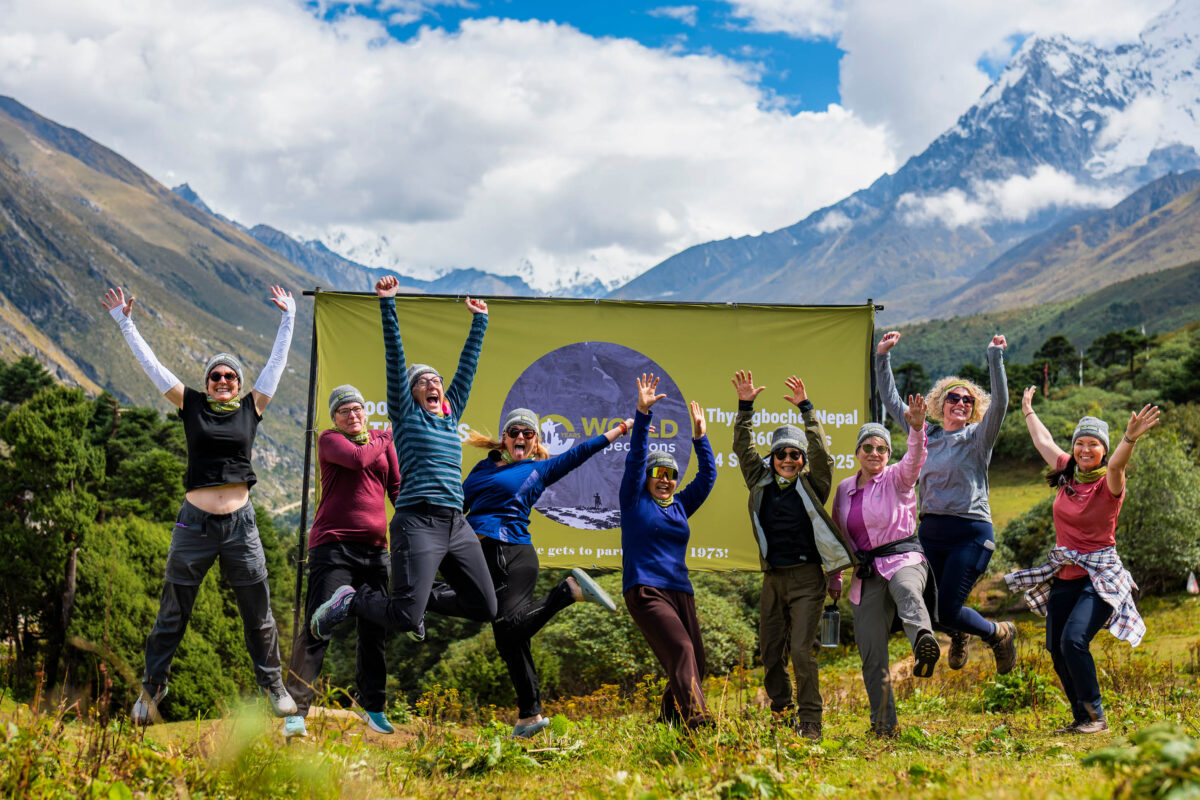
50 Years of Nepal Hiking Tours: Why World Expeditions Matters
World Expeditions wasn’t just celebrating an anniversary—they were celebrating 50 years of operating in Nepal. Fifty years ago, they ran their very first commercial trek into the Himalaya, back when trekking in Nepal was virtually unheard of for independent travelers.
Nepal is the heart of World Expeditions’ story.
Over the decades, they’ve been pioneers in responsible adventure travel. They were the first operator to offer a fully supported commercial trek along Nepal’s section of the Great Himalayan Trail—1,056 miles east to west across the Himalaya. That route alone has always fascinated me; it’s one of the most ambitious trekking projects on Earth.
They were also trailblazers in a way that deeply aligns with how I like to travel: prioritizing local guides as trip leaders rather than flying in foreign tour leaders and using locals only as porters. Back in the 1980s, that was revolutionary. Today it feels obvious—but that shift helped reshape the entire trekking industry in Nepal.
If you want cultural connection, authenticity, and real insight into life in the Himalaya, this approach matters.
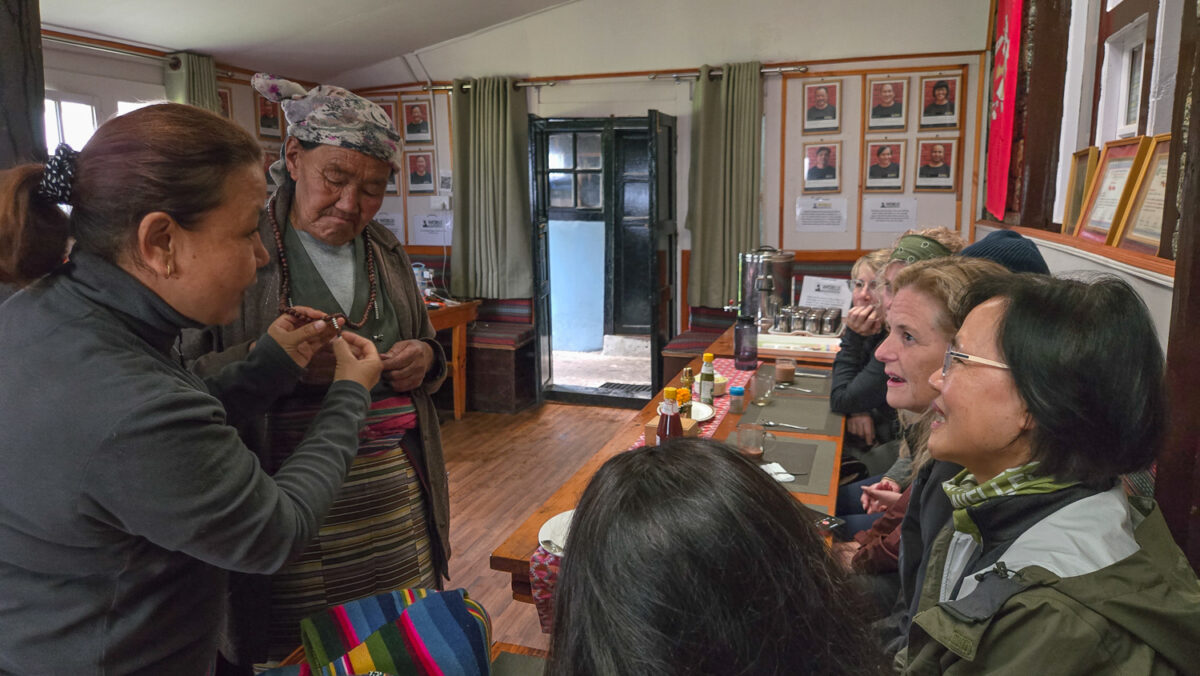
Kathmandu: The Gateway to Every Nepal Hiking Tour
Every Nepal hiking adventure starts in Kathmandu. From here, trekkers fan out by bus, jeep, small plane, or helicopter to reach trailheads across the country.
On my previous trips, I’ve used all of those options. And if there’s one thing I’ve learned about hiking in Nepal, it’s this:
Flexibility is not optional—it’s essential.
Travel Tip: If current events or logistics make you nervous, communicate openly with your trekking company. I was in constant contact with World Expeditions before and during this trip, and that transparency made all the difference.
Heading to the Khumbu: Experiencing the Everest Region Differently
This trip would take me somewhere I had never hiked before—the Khumbu region, often referred to as the Everest region. While I’d spent plenty of time trekking in Annapurna on previous visits, I had always avoided Everest Base Camp.
It felt…too obvious.
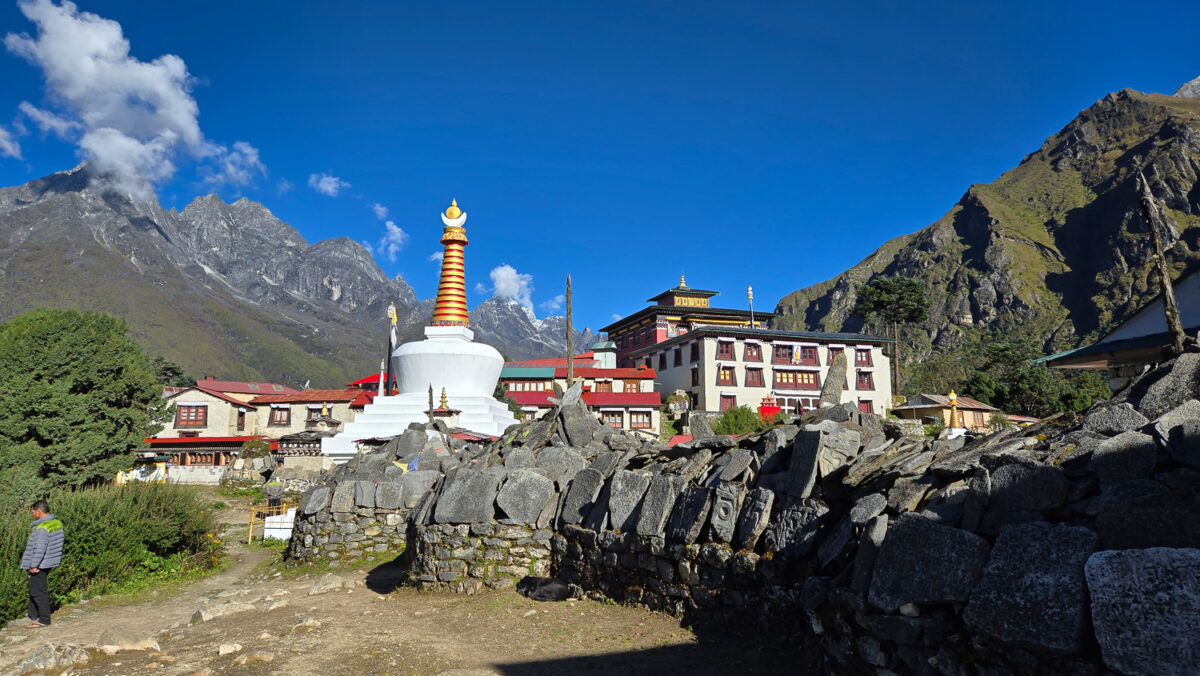
World Expeditions offered a way to experience Khumbu without simply ticking the Everest Base Camp box. Instead, our goal was Thyangboche—home to one of the most important monasteries in the Himalaya—and the gathering point for World Expeditions’ 50th anniversary celebration. Exactly the kind of unique, meaningful travel I love.
A Few Things to Know About Trekking in the Khumbu
- The “Everest region” is properly called the Khumbu.
- Sherpa refers to an ethnic group native to eastern Nepal, not a job title. The word means “People of the East,” referencing their Tibetan origins.
- There are no roads in the Khumbu. Everything—food, fuel, and building supplies—arrives on someone’s back or via livestock.
For Everest region treks, you must fly into Lukla, one of the most notorious airports in the world. Its short, sloped runway and rapidly changing weather conditions make every landing memorable—and occasionally dramatic.
Lukla, Weather Delays, and a Blessing from a Living Goddess
As women from different parts of the world arrived to hike together, we bonded almost instantly—as women tend to do. For everyone in the group, this was their first trip to Nepal, and the excitement was contagious.
For three straight days, flights to Lukla were cancelled due to weather. Luckily, those days were scheduled for sightseeing in Kathmandu and getting to know one another—and our guide, Dawa Yangjin Sherpa, who we quickly nicknamed Mama G. As we explored the city, we quietly debated backup plans: a grueling two‑day drive on mountain roads, or rerouting the entire hike.
Then something unexpected happened.
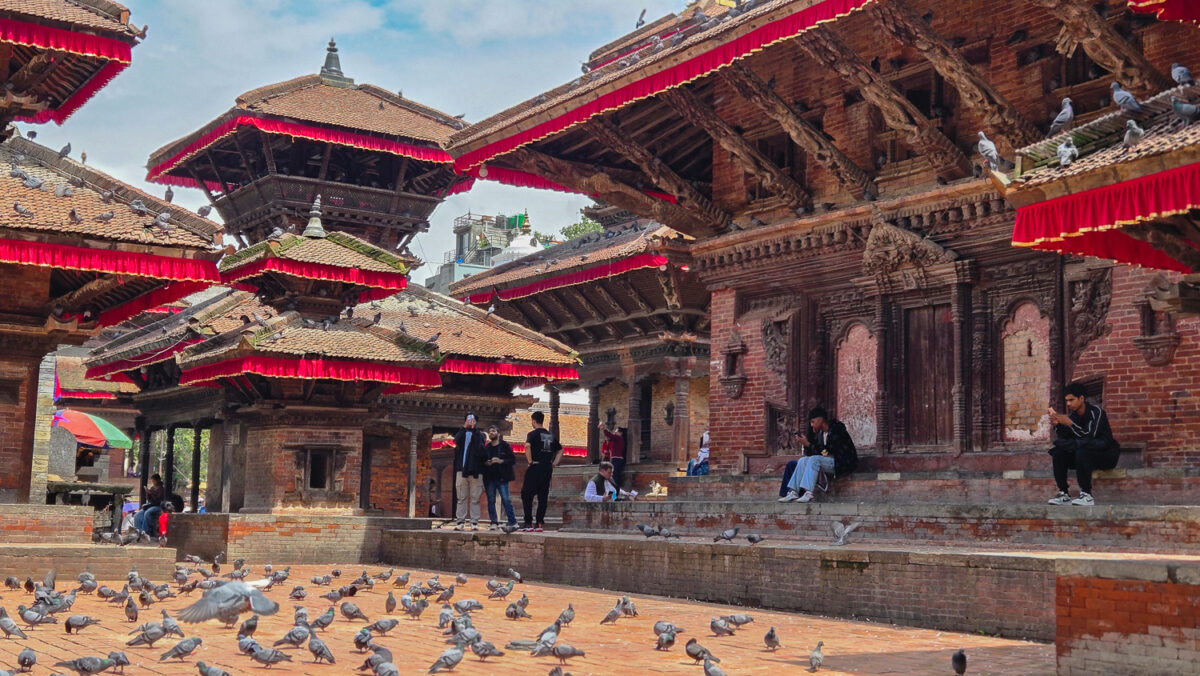
The Kumari is Nepal’s Living Goddess—a young girl believed to embody divine feminine power. She lives in a centuries‑old palace at Kathmandu Durbar Square and makes rare, silent appearances at a window. Even a brief glimpse is considered a powerful blessing.
During our visit, we happened to be inside the palace when the Kumari appeared. I’ve visited this palace three times over the years, and this was the first time I’d ever seen her. It was a strange, powerful moment—one that left me thoughtful and a little conflicted. But that’s what travel does best: it challenges your perspective.
I don’t usually believe in signs. But the next morning, the skies cleared.
We were one of the only planes to land in Lukla that day.
And yes—the landing was as dramatic as everyone says.

Why Hiking in Nepal Is Unlike Anywhere Else in the World (and Why It Ruins You for Other Treks)
I’ve hiked all over the globe, but Nepal still tops my list. It took me years to understand why.
Hiking in Nepal isn’t just about walking beneath the tallest mountains on Earth—it’s about moving through living culture at high altitude, where daily life and the Himalaya are inseparable.
Unlike Patagonia’s W Trek or Peru’s Inca Trail, Nepal’s trails pass directly through villages where people live, farm, send their kids to school, and run teahouses and cafés. You’re not hiking past culture—you’re hiking through it.
That’s the magic.
Hiking to the Highest Anniversary Celebration on Earth (Yes, There Was a Dance Party)
Over five days, we hiked from Lukla to Thyangboche, sharing the trail with livestock, porters, schoolchildren, and locals carrying everything from lumber to refrigerators—often in flip‑flops.
We stayed in World Expeditions Eco Camps, crossed countless suspension bridges, fueled ourselves with masala chai and guilt‑free Snickers bars, and slowly acclimatized as we climbed higher.
Along the way, I met incredible local women running eco camps, teahouses, and coffee shops. We visited the Sir Edmund Hillary School—where Mama G was one of the first girls to attend—and I fell hard for the intrepid group of women I was hiking with. Deep conversations, endless laughter, and an alarming enthusiasm for games bonded us quickly.
After days of climbing, we rounded the corner to see Thyangboche Monastery framed by snow‑capped peaks. Off to the side stood a massive blue tent—ready for a celebration at 12,700 feet. We let out a collective scream of excitement.
More than 70 trekkers arrived from different routes across the Himalaya to celebrate 50 years of World Expeditions. Every chair, table, plate, light, and even that enormous tent had been carried up by people or livestock.
The celebration featured incredible food, cultural moments, and reflections from World Expeditions’ CEO and Nepali leadership team. As night fell, the speeches ended—and the dancing began.
Guides, porters, trekkers, locals, and even the CEO danced together under the stars. Dancing with my new girlfriends, our guides, and porters to a Nepali trekking song I’ll never forget was the absolute highlight of my time in Nepal.

Why I Recommend World Expeditions for Nepal Hiking Tours
After decades of travel around the world, it takes a lot to impress me. World Expeditions does.
Eco Camps That Changed How I Think About Trekking in Nepal
Instead of traditional teahouses, World Expeditions uses semi‑permanent Eco Camps—comfortable tents with real beds, cozy dining huts with stoves, western‑style toilets, and even solar hot showers.
They’re tucked into quiet fields with incredible mountain views and minimize pressure on village infrastructure. Honestly? I can’t imagine trekking Nepal without them now.
Trekking Teams That Are Treated Right
World Expeditions pays living wages, enforces weight limits, and provides proper gear, lodging, and meals—and it shows. Our trekking team was exceptional.
Our assistant guide, Dilip, set a slow, steady pace that kept every woman healthy at altitude. And our lead guide, Mama G, was one of only two female guides at the company—educated at the Sir Edmund Hillary School and living proof of how education transforms opportunity in Nepal.
When you’re choosing a Nepal hiking company, experience matters. Ethics matter. Local leadership matters.
World Expeditions has been doing this right for 50 years—and it shows in every step of the trail.
Frequently Asked Questions About Nepal Hiking Tours
Is Nepal a good destination for first-time international hikers?
Yes—with the right company. Nepal offers some of the best multi-day hiking infrastructure in the world, from well-established trails to experienced guides and porters. Choosing an experienced operator like World Expeditions makes a huge difference, especially when it comes to pacing, acclimatization, and safety.
Do I need previous high-altitude experience to hike in Nepal?
Not necessarily. Many Nepal hiking tours are designed for strong walkers rather than elite athletes. What matters most is going slowly, allowing time to acclimatize, and trekking with guides who understand altitude management. This is where experienced Nepal trekking companies really shine.
What makes Nepal hiking tours different from hiking elsewhere in the world?
In Nepal, hiking isn’t separate from daily life. Trails pass through villages, monasteries, farms, and schools. You’ll share the path with locals, livestock, and porters carrying everything needed for life at altitude. It’s cultural immersion and hiking—at the same time.
Is the Everest region overcrowded?
It can be—but not all Everest region trekking experiences are the same. Routes, timing, and itinerary design matter. World Expeditions offers alternatives that focus on cultural landmarks like Thyangboche rather than simply racing to Everest Base Camp.
What is the best time of year for hiking in Nepal?
The most popular seasons for Nepal hiking tours are spring (March–May) and fall (October–November), when weather conditions are generally stable and mountain views are at their best. That said, shoulder seasons can also offer quieter trails and unique experiences.
Why choose a women’s hiking tour in Nepal?
Women’s hiking tours create a supportive, confidence-building environment—especially in destinations where gender roles and cultural dynamics are different. Hiking with women and being led by a female Nepali guide added depth, perspective, and connection to this experience.
If Nepal has been calling your name—and you want a hiking experience that balances adventure, culture, responsibility, and a little unexpected joy (including dancing at altitude)—World Expeditions is absolutely a company worth putting at the top of your list.