
I’m walking – no, staggering – along a narrow country road in rural Shikoku. The temperature on my phone reads 45C and the air is so thick with humidity in the midday sun that it’s hard to breathe.
I’m sweating like I’ve never sweated before. And carrying a giant 18kg backpack, I feel as though I’m fighting for my life out here.
I’m less than one day into what’s supposed to be a six-week, 1,200km-long solo hike around the smallest of Japan’s four main islands. It’s a gruelling ancient pilgrimage that barely anyone, even in Tokyo, has heard of – as I learnt when I landed there a week before starting the feat.
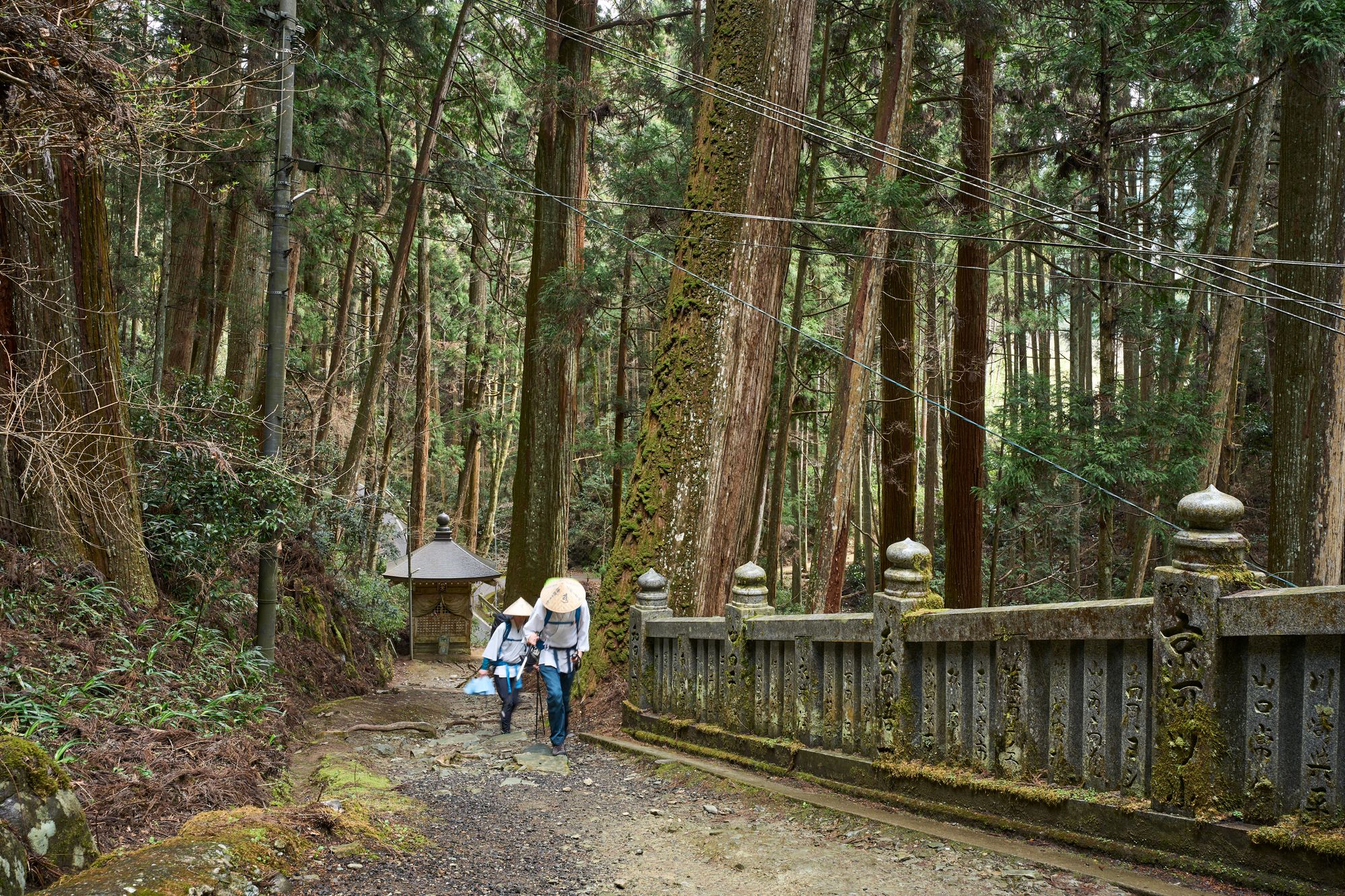
Following in the footsteps of Kobo Daishi, a famed ninth century Buddhist monk, who is said to have reached enlightenment through the physical and mental challenge, it will take me to 88 temples. Here pilgrims – who wear a traditional white robe – collect 88 unique marks of calligraphy from monks to track their progress.
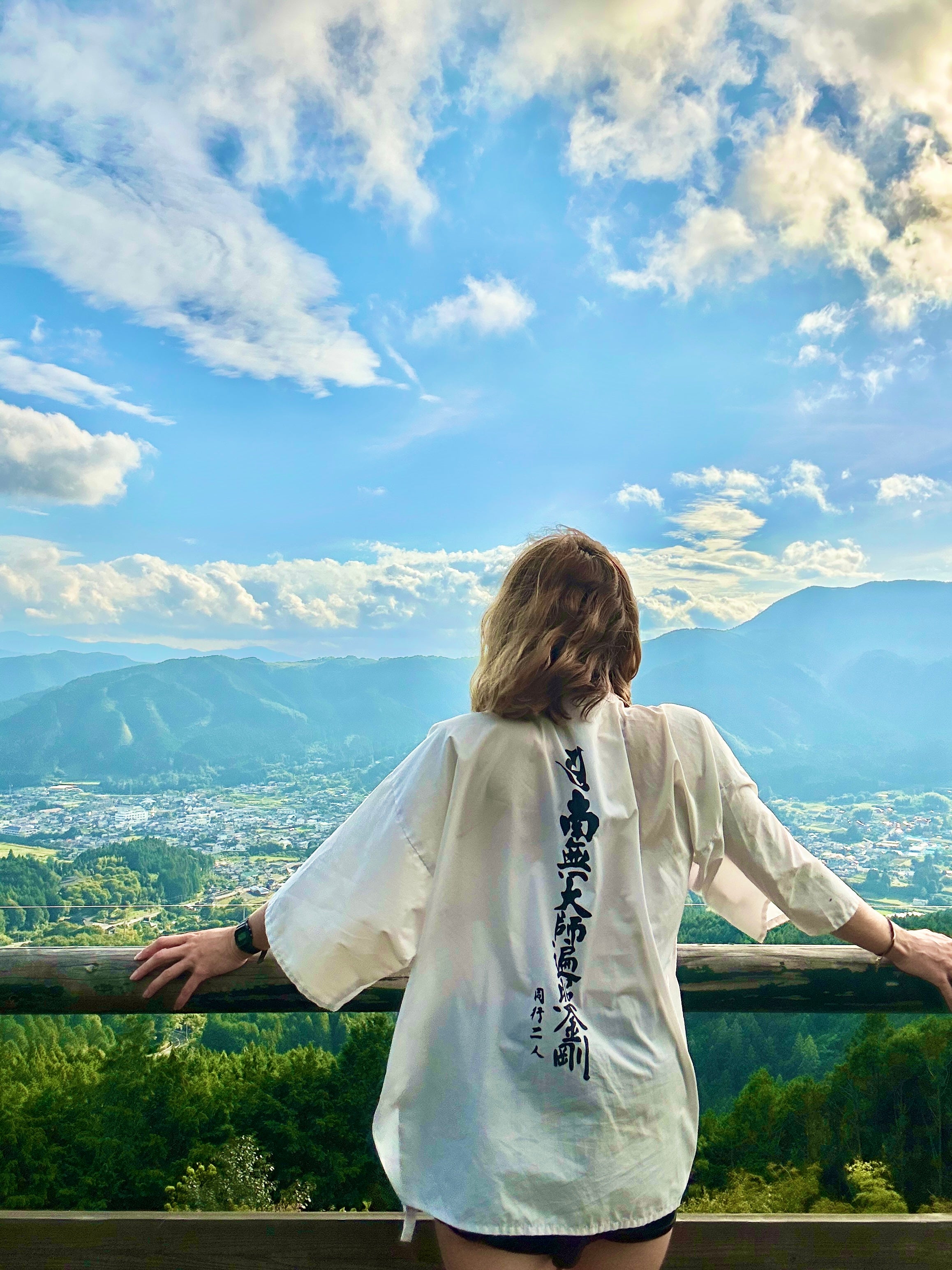
At this moment, completing it seems impossible. I had arrived in Shikoku in a state of heartbreak and burnout, and hoped this challenge would be healing, but I’m already asking myself: “What was I thinking?”
As well as the heat being unbearable, I’m also exhausted and it’s hit me that I feel desperately alone. To add to this, I feel anxious about not yet understanding the local social etiquette. My Duo Lingo Japanese has been getting me nowhere.
Read more: What it’s like to hike Japan’s sacred Kumano Kodo trail
I’m still questioning my life decisions when I pass an elderly man on his driveway. I bow my head to greet him.
Thirty seconds later he’s rushing to catch up with me, thrusting a towel and bucket hat in my direction, concerned for me during record-breaking summer heat.
Then when I’ve made it just a few kilometres further, the same man pulls up in his car. Evidently, he’s driven to a nearby shop and then sought me out once again – this time he passes a full plastic bag through his window, filled with cans of iced coffee, rehydration drinks and ice packs. After thanking him profusely in my best Japanese, shocked by the unbelievable kindness, I gulp down some electrolytes, pop an ice pack under my new hat, beaming, momentarily refreshed and inspired to carry on.
This is my first, and very welcome introduction, to osettai – the centuries-long practice in which locals offer gifts to support pilgrims (known as henros) – on this walk. As I’ll later learn, it’s just one of hundreds of kind gestures that will lift my spirits and spur me on when it’s most needed.
The “Shikoku Henro” route is said to provide four stages of spiritual development to those who complete it: “Awakening”, “Ascetic Training”, “Enlightenment” and “Nirvana”. These correspond to the island’s four prefectures.
Unsurprisingly, of the estimated 300,000 people who make the pilgrimage every year, the vast majority travel via car or public transport, and just one to two per cent now walk the entire route as I intend to.
At this point, I have a long way to go to reach Nirvana, but here goes.
Tokushima: Awakening (temples 1-23)
There’s no easing into this hike. After a long and complicated day’s travel from Tokyo to Temple one (Ryozen-ji), I’m traversing vast open farmland, bush whacking through dense woodland and scaling mountains canopied in tropical forest.
“Awakening” is exactly the right word to describe this section, as I’m left suddenly alone in a challenging environment, with only my thoughts for company.
It’s confronting both physically and mentally – and never more so than on day three when I must climb the first of seven “henro koragashi”, which translates to “pilgrim tumblers”, and refers to seven particularly difficult to reach temples. There are three of these in just the first week’s worth of the route.
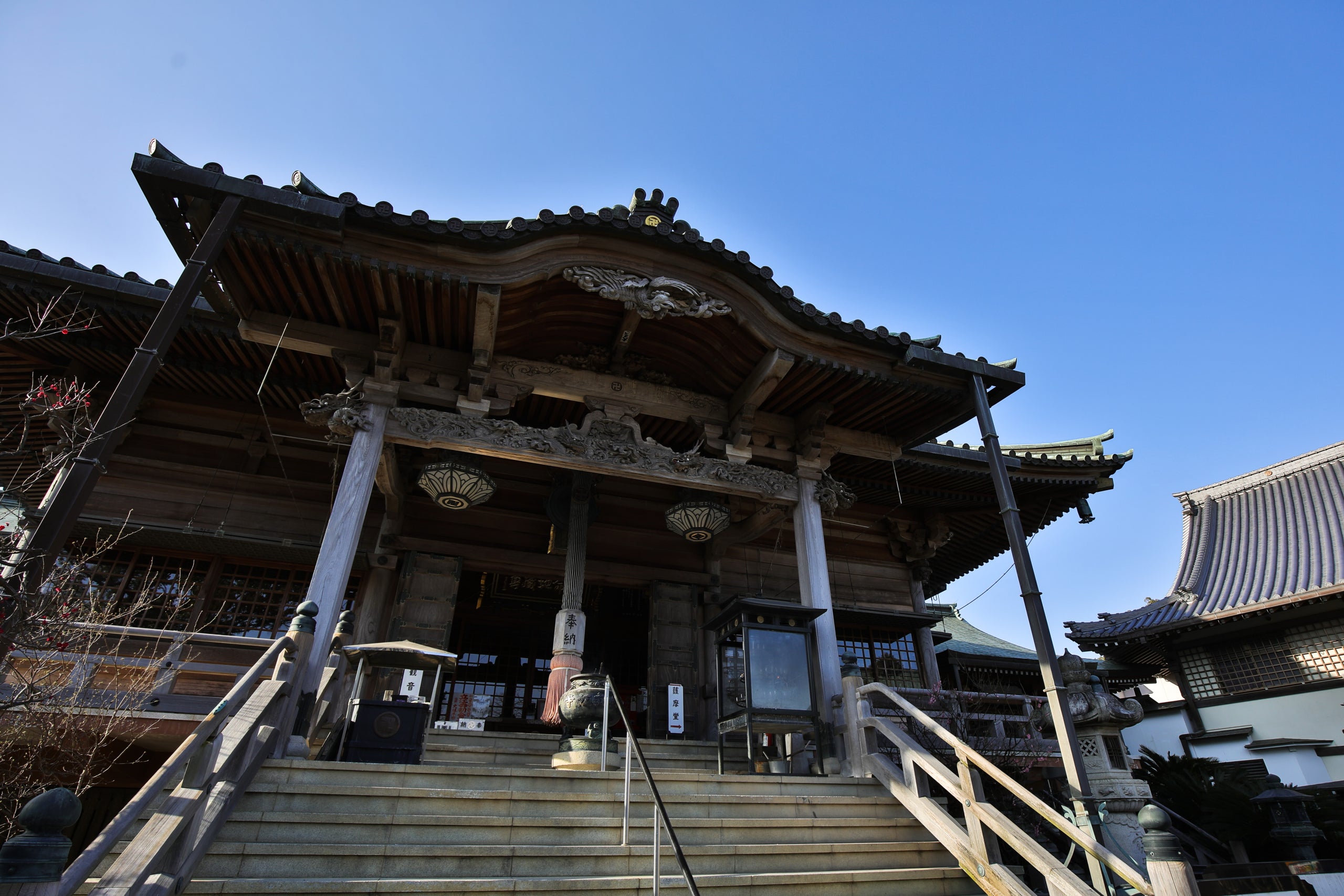
Intimidating both in scale and their isolation, these climbs require pilgrims to ascend steep mountains on terrain that is difficult to scale, where huge spiders dangle above, and bright-orange crabs scuttle below.
Though there is an upshot: on the first big climb, there’s no room for thoughts of the normal stresses of life. My mind is focused entirely on reaching the top of the mountain. In near 100 per cent humidity with a rainstorm forecast, the forest is dripping – as am I.
I haul myself higher through creaking bamboo groves. Then just 15 minutes before reaching the summit, the clouds explode and I’m delivered to Temple 12, Shosan-ji, drenched. Grateful for the cooling shower, and proud of overcoming the first of many challenges, my mind is more at ease, and I feel deeply grounded in the journey.
Kochi: Ascetic Training (temples 24-39)
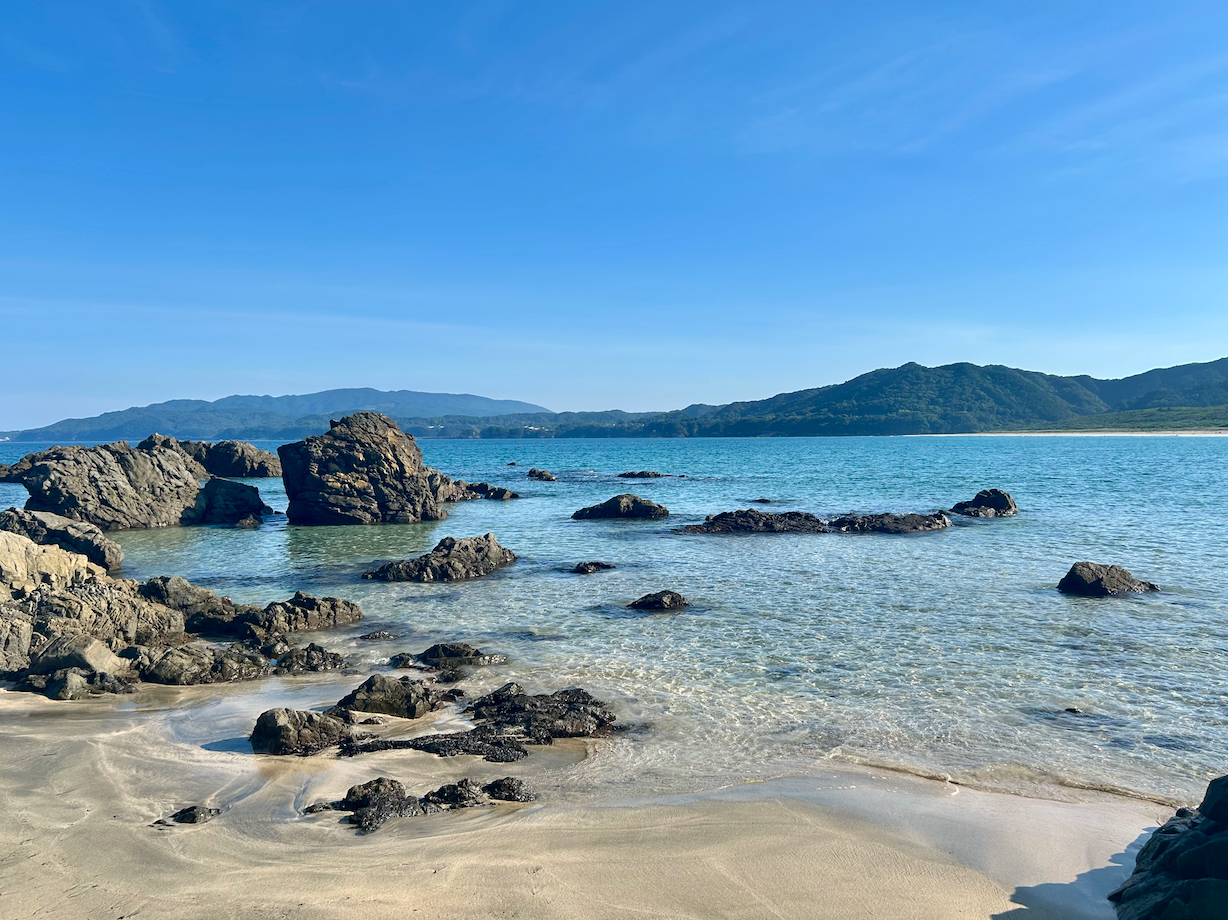
Crossing into Shikoku’s second prefecture, Kochi, I reach the Pacific South Coast, where the countryside is replaced by rugged shorelines and palm-lined beaches. The horizon punctuated only by the dark specks of surfers against the shocking blue of the ocean.
I’m entering the Ascetic Training section of the pilgrimage, said to bring “austerity and discipline” (neither being a quality I’d usually associate with a holiday). The focus is on pushing physical and mental limits to help pilgrims confront their egos and practice self-mastery.
With distances between temples increasing to up to 85km, and consecutive days pounding burning-hot tarmac, it is monotonous and painful – plus with the temperature still hovering above 40C, it is also dangerously dehydrating.
Grumpy and sick of road-walking when leaving the inland town of Tosa, I jump at the possibility of taking an alternative mountain route to reach the next temple in the harbour of Usa.
Read more: Why you should experience Tokyo by bike
The trail is steep and overgrown, but the view from the top is awe-inspiring. Giddy from what I’d seen (and a sugary dessert gifted to me, as osettai, by the only other hiker I saw), I begin the long descent.
Though my mood quickly changes when navigating slick moss covered rock – I slip half way down, tumbling over the edge of the trail, thankfully becoming wedged against a tree on a small ledge. Miraculously my hiking pole, which has snapped clean in half, takes the worst of the damage.
With little room to manoeuvre, shaky, tangled in branches, and weighed down by my heavy pack like a beetle on its back, I slowly find my way to my feet and heave myself back up to the path above.
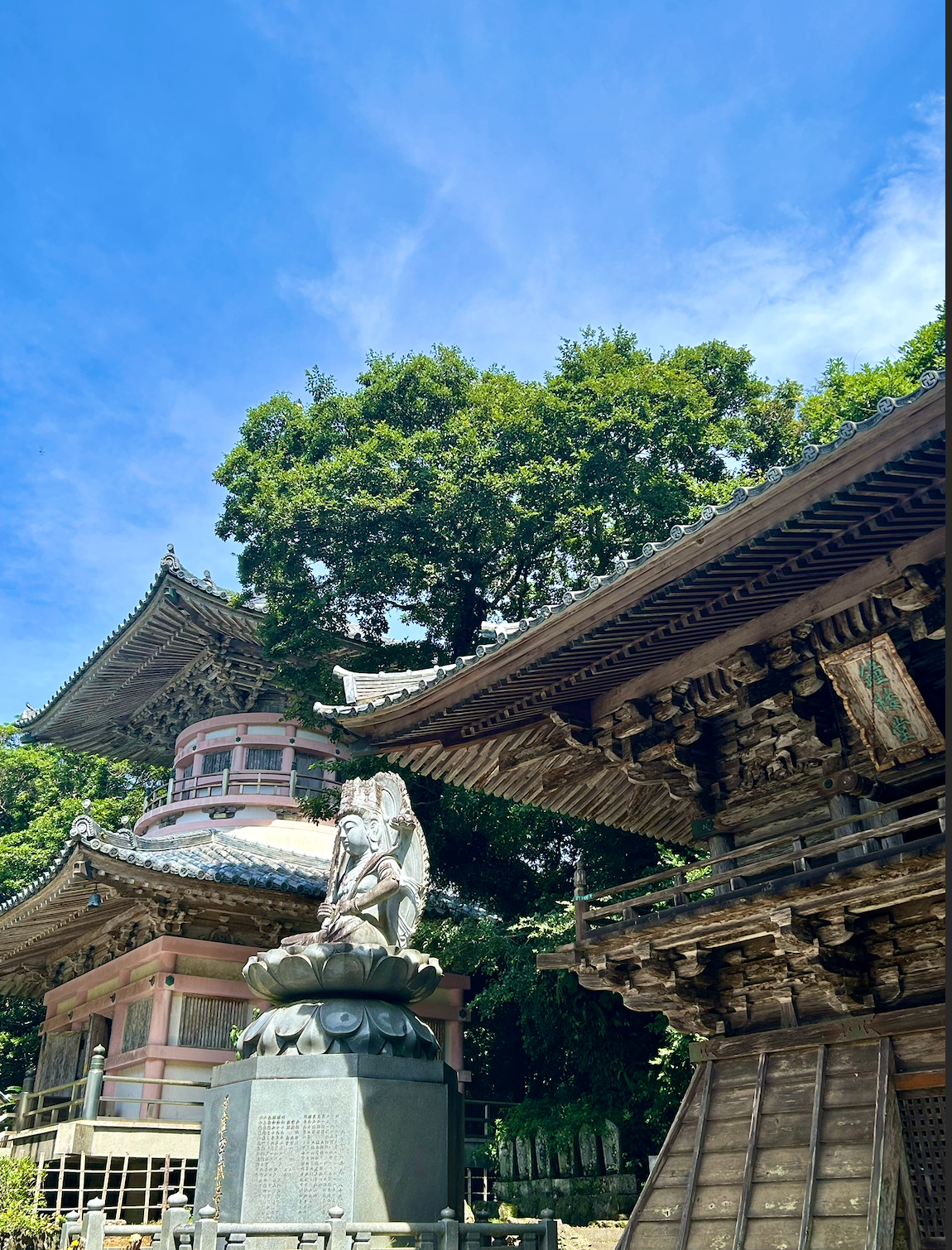
Scraped and bruised, I reach my hostel in Usa within a couple of hours, where – to my delight – I am able to borrow a bike to visit Temple 36 (Shoryu-ji).
It’s a certified rust-bucket city cruiser, but pedalling in perfect sunshine over the epic Usao bridge is pure, unadulterated joy and outshines any memory of falling down the mountain.
This would turn out to be one of several examples of serendipity on this section of my trip. Another was happening upon a carnival on the route in Nakamura, where people danced and drank beer.
Next, I treat myself to a divine rest day spent snorkelling in the crystal clear waters of Oki Beach.
As promised, I was pushed to my limits many times, and my ego was certainly tested, but through adversity came resilience, discipline and the reassurance that this journey would deliver respite and reward when least expected.
Ehime: Enlightenment (temples 40-65)
Leaving Kochi and swapping the Pacific Coast for Seto Inland Sea in Ehime, the pilgrimage is said to transition from being a trial to encouraging contemplation. Though I was certainly fitter and more at peace than when I started, there were plenty of trialling moments coming my way in the form of a slew of gritty mountain passes.
However, amid the challenges of either finding my path blocked, totally disintegrated by landslides, or my GPS telling me to walk off a cliff, there was a repeated source of solace in the form of small notes left by previous henros.
No more so than on day 28, when while traversing yet another perilous mountainside after climbing for hours, some 15km in, my trail suddenly disappears. Cue several minutes of rising panic, searching desperately for a path.
Suddenly I spot an aged, laminated piece of paper hanging from a branch. It is the only sign of human life I have seen in hours – and becomes one of hundreds of henro tags I come across during this journey. They not only act as useful markers of the right direction, but as invaluable silent offerings of reassurance left by other pilgrims, who’ve endured the same challenges I’m facing.
Read more: This underrated Japanese city is perfect for escaping overtourism
Kagawa: Nirvana (temples 66-88)
After completing the journey of self-discovery, in Shikoku’s fourth prefecture pilgrims are said to enter a state of peace and fulfilment. With just a week more of walking remaining, this is exactly how I enter Kagawa. I feel calmer, more present, and more content than I have in years.
I’m so relaxed on this final stretch that just three days before the end I suffer my one and only accommodation mishap, ending a gruelling 37km day without anywhere booked to stay. I simply forgot! But with my newfound calmness, I take it in my stride, searching for a bed for the night in a dark stairwell on my phone.
Arriving just as the region’s autumn festivals take place, over the coming days I routinely meet large colourful processions passing through villages. After so long in the wilderness, as striking as these are, they give me sensory overload, and it feels like a welcome escape when I climb back into the mountains of Kagawa where the final challenge of my pilgrimage lies.
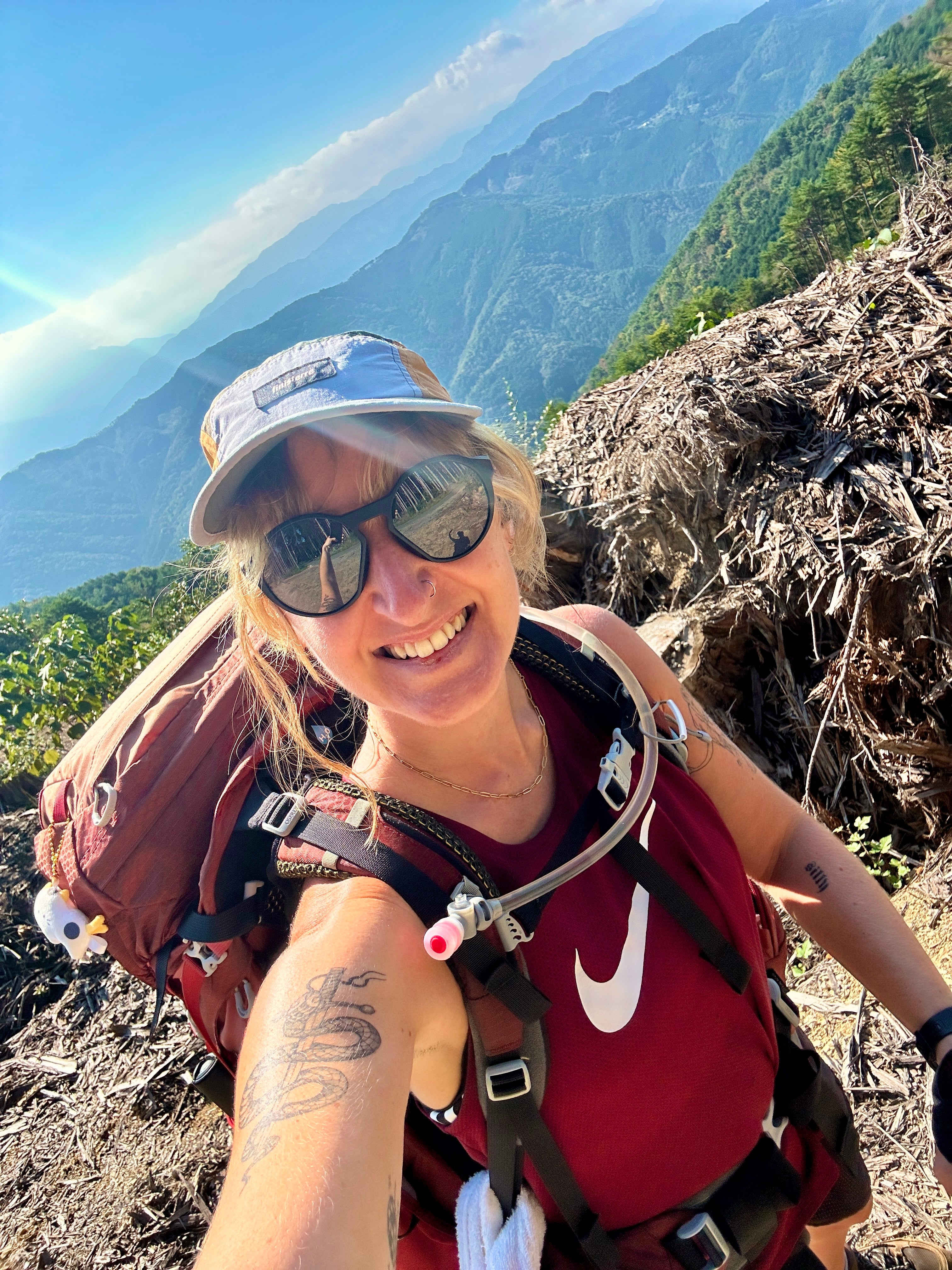
The climb to Temple 88 (Okubo-ji) isn’t supposed to be anything too strenuous. I see the 782m summit to Mount. Nyoraisan as something I can easily conquer, writing it off as an easy day’s work. I allow myself a leisurely lunchtime picnic ahead of my final victorious climb.
So it isn’t until around 1.30pm that I head uphill, where paths soon become juicy switchbacks, and are followed by a sketchy patchwork of ladders. Then, once high in the sky, I am delivered to a sheer vertical rockface. “This can’t be the way,” I think, looking around for some alternative path. But there are none.
It would require a rock climb using both hands and feet. I take a deep breath and say out loud: “How do you eat an elephant? One bite at a time.”
One careful move at a time, I haul myself up, until with white knuckles and blackened palms I reach the summit.
Read more: Why the ‘Hawaii of Japan’ should be your next beach holiday
After taking in the epic view of nearby forested Mount. Yahazu I realise this peak is just a few metres wide, and having just arrived, I now to need to rapidly descend on the other side. It’s already 4.15pm and starting to get dark. A sense of urgency begins to rise.
I have just 1km to go, but that requires a solid 1,000m of descent in fading light, on fading legs, with just 45 minutes until the temple closes.
Determined to make it, I arrive and collect my final calligraphy just minutes before the monks are due to leave. I make my final prayers alone as the last of the day’s light disappears.
And with that the walk is complete.
I shed a quiet tear about the journey I’ve made, but there is no fanfare, no one around to say well done or take a photo of me at the finish line. And that feels exactly right. This was a journey taken in solitude, in quiet contemplation. The victories are unspoken.
I later discover that the last – frankly, terrifying – climb was entirely optional. There is a road most walkers follow which skirts around the base of the mountain. I had needlessly dragged myself up and over. But I wouldn’t have ended it any other way.
Six weeks earlier, arriving on Shikoku feeling lost, and ground down by a tumultuous few years, I couldn’t have done what I did on that final day. Cliché as it may sound, I couldn’t have done the final climb without accumulating all of the skills I’d gained along the journey.
Perhaps I didn’t quite reach a state of enlightenment like Kobu Daishi, but thanks to the eminent beauty of both Shikoku’s nature and its people, 1,200km later I had achieved something that felt equally monumental: I once again felt like myself.
How to do it
From Tokyo, catch the Shinkansen bullet train to Kobe, which takes around two and a half hours. From there take the Kobe Airport limousine bus to Naruto, bookable via Japan Bus Online. Local buses or trains run from here to Bandō Station, which is close to the pilgrimage start point, Temple 1: Ryozenji.
British Airways flies direct to Tokyo from London, with flight times of around 14 hours.