
Sardinia has four passenger ferry ports, spread across an island that takes roughly three hours to cross by car from north to south. Which port you sail into decides your first two hours on the road, which stretch of coast you reach first, and if you only have a week, sometimes which part of the island you see at all.
Three mainland Italian cities run regular ferries to Sardinia: Genova in the north, Livorno in Tuscany, and Civitavecchia near Rome. They don’t serve the same ports, run the same schedules, or suit the same kind of trip.
This guide isn’t about whether to take the ferry. It’s about which combination of mainland port and Sardinian arrival point works best for the trip you’re planning.
Overview:
The Four Ports of Sardinia and What Each One Gives You
Sardinia’s ferry traffic arrives at four main passenger ports. Olbia and Golfo Aranci sit in the northeast. Porto Torres is in the northwest. Arbatax is on the eastern coast, and Cagliari is the southern port and the island’s capital. Each one drops you into a different corner of Sardinia, and each opens up a different set of destinations once you’re on the road.
Olbia is the island’s busiest passenger port and the gateway to the northeast. The Costa Smeralda, the beaches of the Gallura coast, and the Maddalena archipelago are all within 30 to 60 minutes by car. Olbia also connects to the rest of Sardinia via the SS131 state road, which runs the length of the island to Cagliari in roughly three hours. You can reach Olbia by ferry from Genova, Livorno, and Civitavecchia.
Golfo Aranci sits about 20 km from Olbia and functions as a quieter extension of the same northeast hub. It’s served primarily by ferries from Livorno and gives access to the same northern coastal area, sometimes at lower fares than Olbia itself.
Porto Torres is the northwestern port and the closer of the two northern options to Alghero, Sassari, and the Coral Coast. It runs ferries to and from Genova year-round, and sits roughly 2.5 to 3 hours from Cagliari by road, slightly closer than Olbia.
Arbatax is the eastern port. It receives ferries from Civitavecchia and gives the best access to Ogliastra, the Gennargentu mountains, and the Gulf of Orosei. This is the entry point for travelers who want to skip the Costa Smeralda crowds and focus on the island’s more rugged interior and eastern coastline.
Cagliari is the southern port and the capital. Arriving here means stepping straight into a proper city, with arcaded promenades, a hilltop old town, and trattorias along the waterfront. It runs ferries from Civitavecchia year-round.
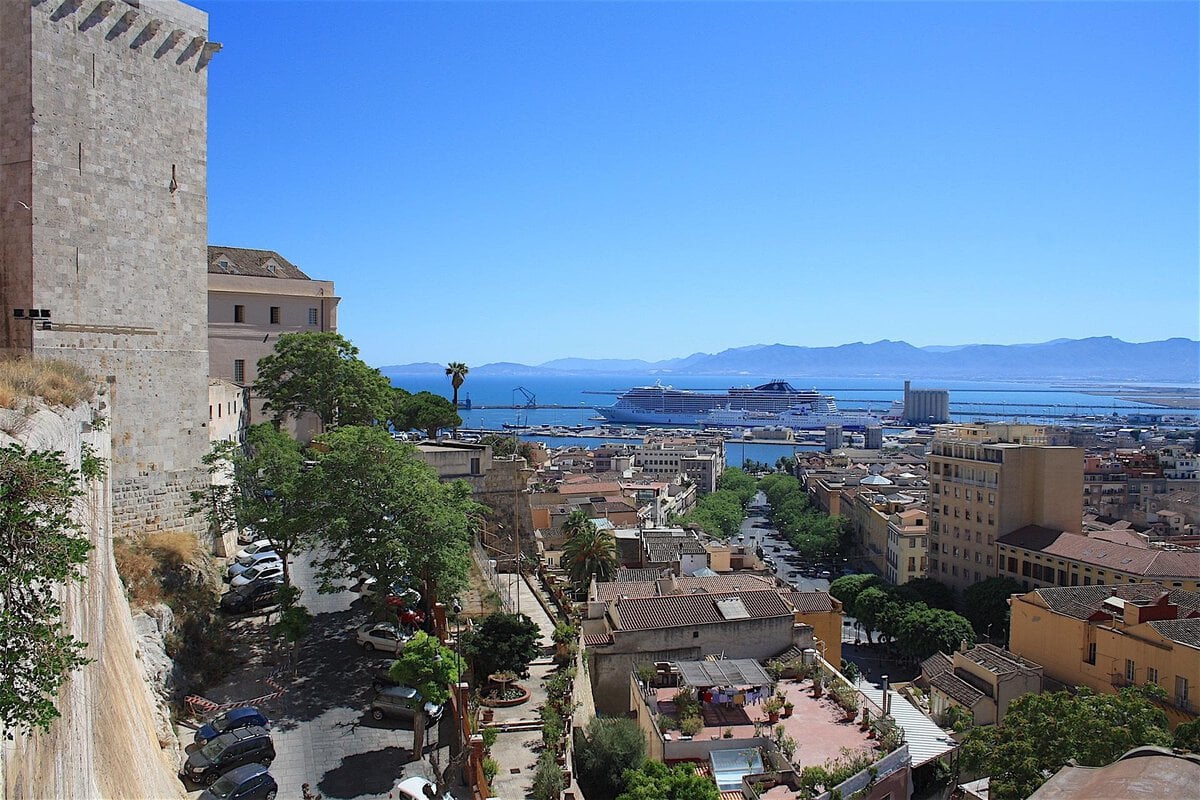
Leaving from Genova: The Long Crossing from the North
Genova is the northernmost of the three mainland departure points. That matters in two ways. It attracts travelers driving south from northern Italy, Switzerland, Germany, and France, and it has the longest crossing times to Sardinia.
The routes and crossing times
From Genova, ferries serve Olbia and Porto Torres.
- Genova to Olbia: approximately 11 to 13 hours, operated by Grandi Navi Veloci (GNV) and Moby Lines. Moby runs daily night crossings in both directions from May 23 to November 1, 2026. GNV runs the route from May to October with both daytime and overnight sailings. The route is fundamentally seasonal.
- Genova to Porto Torres: around 10 to 12 hours, operated year-round by Tirrenia (part of the Moby Group), with daily night departures. GNV adds extra capacity on the same route from May to October.
Most crossings from Genova leave in the evening and arrive in Sardinia the following morning. They’re effectively overnight sailings, which removes the need to book a hotel en route. Check-in for vehicles typically closes 90 minutes before departure on Moby and Tirrenia services. For GNV, check-in opens two hours before departure and closes 45 minutes before. Either way, arriving at the port two hours ahead is sensible, especially in peak summer when queues build up.
For current timetables across all operators serving these routes, Ferryhopper’s Sardinia ferries page lets you compare schedules and availability in one place.
Who Genova suits
Genova works well for travelers arriving from northern Europe by road, whether you’re coming from France, Switzerland, Austria, or northern Italian cities. You drive south, reach the port in the evening, and wake up in Sardinia. The overnight crossing genuinely earns its place here. It replaces a night in a hotel with a cabin on the ferry, saves a full day of driving, and delivers you rested at the port.
It’s also the right choice if Porto Torres is the target arrival port. Porto Torres gives direct access to the northwest, including Alghero’s old town and sea stacks, Sassari, the Coral Coast (Riviera del Corallo), and the drive south along the less-visited western coast.
Genova as a city stopover
The ferry terminal sits roughly 1 km from Genova Piazza Principe station, accessible on foot or by metro. If you’re driving down from the north with time to spare before an evening departure, Genova’s old town is worth half a day. The UNESCO-listed medieval center, with its narrow lanes known locally as caruggi, and the Acquario di Genova are both within walking distance of the port.
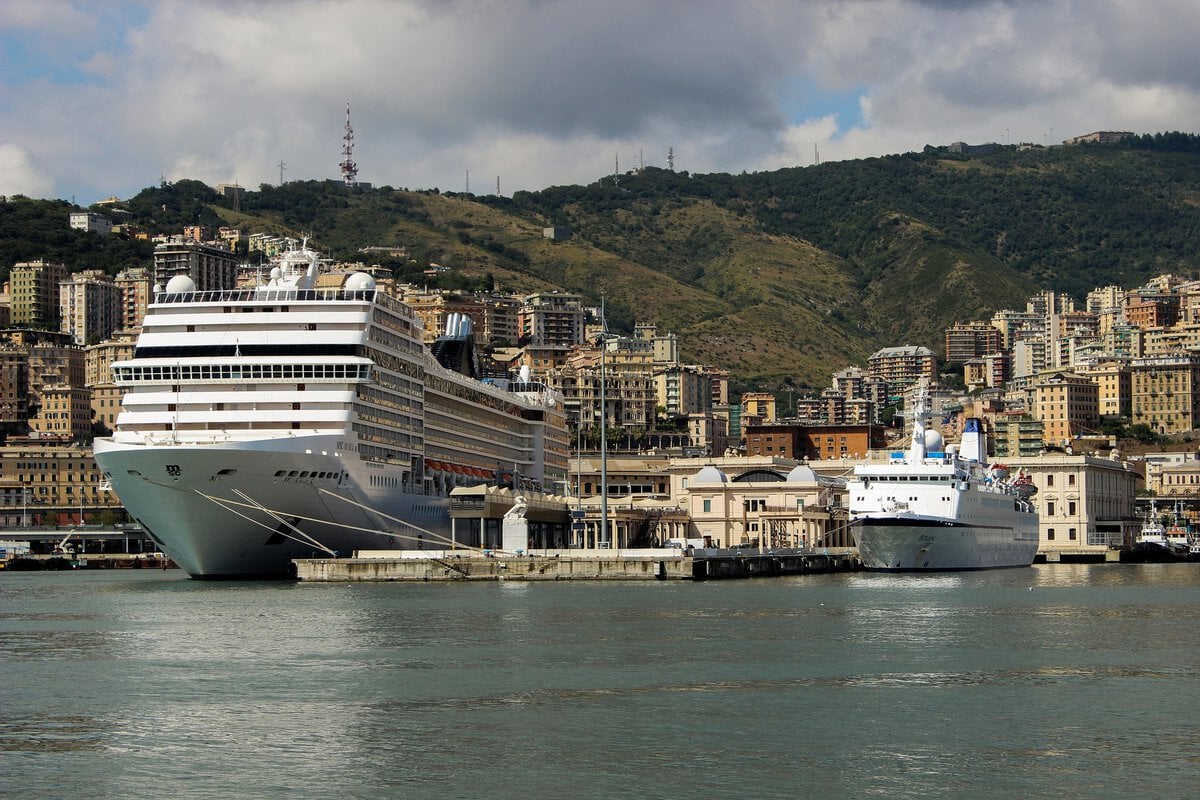
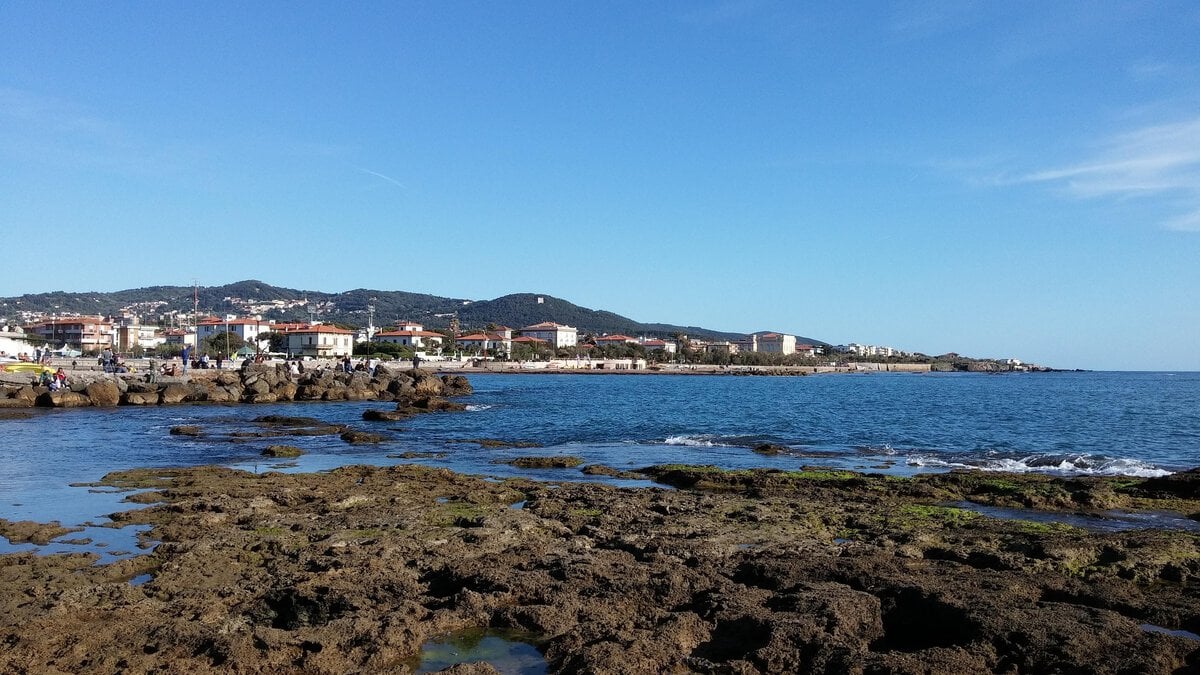
Leaving from Livorno: The Tuscan Option in the Middle
Livorno sits on the Tuscan coast between Genova to the north and Civitavecchia to the south. That position makes it the natural departure for travelers already exploring central Italy, including Tuscany, Florence, and Pisa, before adding Sardinia to the trip.
The routes and crossing times
From Livorno, ferries serve Olbia and Golfo Aranci.
- Livorno to Olbia: approximately 7.5 to 9 hours, operated year-round by Moby Lines and Grimaldi Lines, with both day and night crossings. The Grimaldi day sailing departs at 10:00 and arrives around 19:00. Night departures leave between 21:30 and 22:30 and arrive the following morning.
- Livorno to Golfo Aranci: approximately 9 to 10 hours, operated by Corsica Sardinia Ferries year-round, with two daily departures from May to September.
The combination of day and night sailings from Livorno gives more flexibility than Genova. You can cross during the day and watch the Tuscan and Sardinian coasts go by, or take an overnight sailing and arrive fresh. For Moby and Grimaldi, check-in for vehicles typically closes 90 minutes before departure.
Who Livorno suits
Livorno is the right departure if you’re building a trip that combines Tuscany with Sardinia. A few days in Florence or the Chianti hills, then the ferry south. It also works well for travelers coming from central Europe via the Brenner Pass or the A1 motorway, since Livorno sits at the junction of major routes connecting northern Italy with the Tyrrhenian coast.
The shorter crossing time matters too. At 7.5 hours minimum, compared with 11 hours from Genova, Livorno is preferable if you’d rather not spend a full night at sea. A day crossing puts you in Sardinia by early evening, with enough time to reach a guesthouse and eat dinner.
Reaching the Livorno ferry terminal
Porto Livorno 2000, the passenger terminal, is accessible by road via the A12 Genova–Livorno motorway or the Florence–Pisa–Livorno expressway. The nearest train station is Livorno Centrale, about 10 minutes by taxi. Pisa’s Galileo Galilei Airport is roughly 20 to 22 km away. Foot passengers can reach the port from Livorno Centrale by bus to Piazza Grande and a 10-minute walk from there.
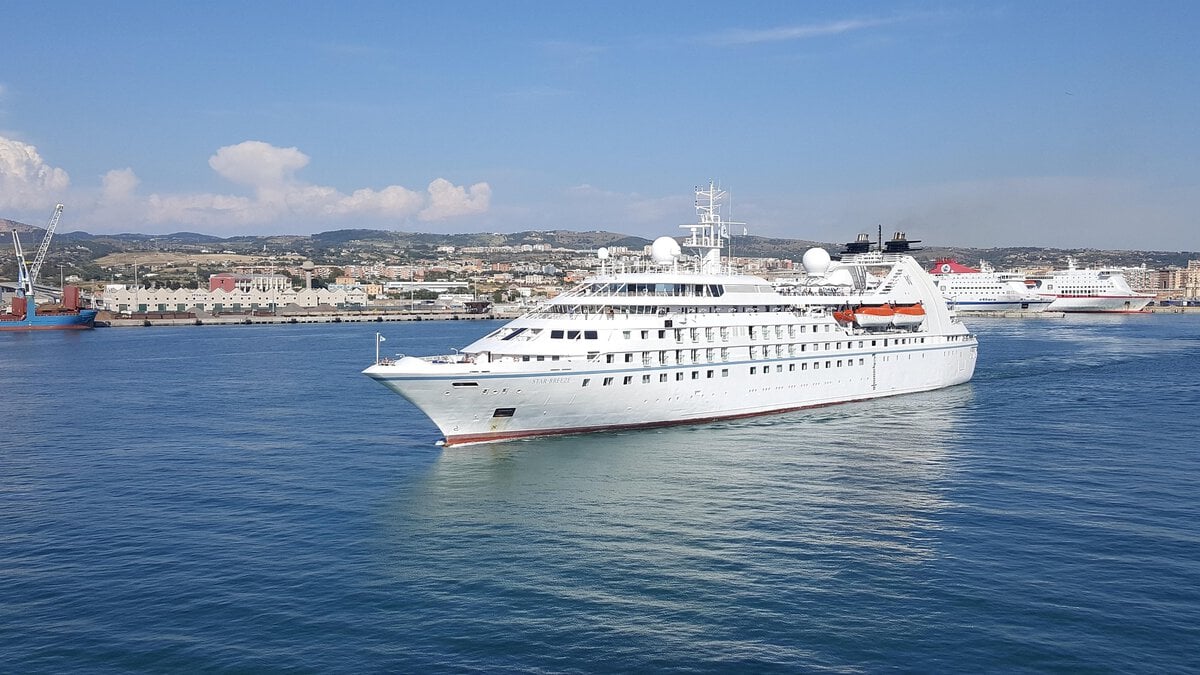
Leaving from Civitavecchia: The Fastest Crossing from Rome
Civitavecchia is Rome’s port, about 70 to 75 km northwest of the city. Trains from Roma Termini take roughly 45 minutes on the fastest Intercity services and around 70 minutes on regional trains, with at least two departures per hour throughout the day. Civitavecchia is also the departure point with the widest range of Sardinian destinations. Ferries from here reach Olbia, Porto Torres, Arbatax, and Cagliari.
The routes and crossing times
- Civitavecchia to Olbia: approximately 6.5 to 8 hours, operated by Tirrenia (year-round, part of the Moby Group) and Grimaldi Lines (June to September, daytime sailings). This is the fastest route from mainland Italy to Olbia.
- Civitavecchia to Porto Torres: approximately 7 to 9 hours, operated by Grimaldi Lines from June through September and by Trasmed GLE (also Grimaldi Group) the rest of the year. The route runs year-round, though frequency drops to 1 or 2 sailings per week in the off-season.
- Civitavecchia to Arbatax: approximately 9 to 10 hours, operated by Grimaldi Lines under a public-service-obligation contract. The route runs year-round, with two evening departures per week (typically Tuesday and Thursday) and a third in August.
- Civitavecchia to Cagliari: operated by Grimaldi Lines year-round, three evenings per week. Tuesday and Saturday sailings stop at Arbatax en route and take roughly 15 hours total. Thursday sailings are direct and take about 13 hours. All depart at 20:00.
Who Civitavecchia suits
Civitavecchia is the practical choice if you’re based in Rome or traveling through central Italy and want to avoid flying while bringing your own vehicle. It’s also the only mainland port with direct ferries to Cagliari and Arbatax, which makes it the entry point for two trip types the other ports don’t cover.
For eastern Sardinia (the Gulf of Orosei, Cala Gonone, the Gennargentu mountains, and the beaches of Ogliastra), Arbatax puts you closest to the action. No other mainland ferry reaches Arbatax.
For southern Sardinia (Cagliari, Sulcis, the beaches of the Sinis peninsula, and the flamingo lagoons near Oristano), the direct overnight to Cagliari from Civitavecchia removes the need to cross the whole island after arriving in the north.
Reaching Civitavecchia
Trains from Roma Termini to Civitavecchia run at least twice an hour. The fastest Intercity services complete the journey in around 45 minutes; regional trains take about 70 minutes. The train station sits roughly 1 to 1.5 km from the ferry terminal, walkable in 15 to 20 minutes or a short taxi ride. For drivers, the A12 motorway from Rome takes about 60 minutes under normal conditions.
Matching Your Departure Port to Your Sardinia Itinerary
The table below summarizes which combination of mainland port and Sardinian arrival point makes sense for each type of trip.
| Your trip focus | Best Sardinian arrival port | Best mainland departure | Crossing type |
| Costa Smeralda, northeast beaches, Maddalena archipelago | Olbia | Civitavecchia (fastest), Livorno, or Genova | Day or overnight |
| Northwest Sardinia: Alghero, Sassari, Coral Coast | Porto Torres | Genova (year-round) or Civitavecchia (lower frequency) | Overnight |
| Eastern Sardinia: Gulf of Orosei, Ogliastra, Gennargentu | Arbatax | Civitavecchia | Overnight |
| Southern Sardinia: Cagliari, Sulcis, Oristano | Cagliari | Civitavecchia (year-round) | Long overnight |
| Tuscany and Sardinia combined trip | Olbia or Golfo Aranci | Livorno | Day or overnight |
| Driving from northern Europe via Italy | Porto Torres or Olbia | Genova | Overnight |
Practical Tips for Any Crossing
Book early for summer. July and August see the heaviest demand on every route. Prices rise sharply in peak weeks, and cabin availability runs out well before the sailing date. Booking two to three months ahead for summer crossings is standard practice.
Choose a cabin for overnight crossings. On any sailing over eight hours, a cabin with a bunk is worth the extra cost. Reclining seats in shared lounges get cold and uncomfortable over a long crossing. Two-berth inside cabins are the cheapest private option; sea-view cabins cost more.
Day crossings have their own appeal. The Livorno–Olbia route and some Civitavecchia–Olbia services run during daylight hours. Watching the Tyrrhenian coastline from the deck as Sardinia comes into view is a different experience from waking up already in port. Worth considering if the crossing itself matters to you.
Foot passengers and vehicle passengers. All routes carry cars, campervans, and motorcycles. Foot passengers are fine too, though renting a car after you land gives much more flexibility once on the island.
Arrive at the port with time to spare. Vehicle check-in typically closes 90 minutes before departure. Italian port check-in during summer can involve real queuing, so arriving two hours ahead is sensible.
Season matters. Some routes run year-round (Livorno–Olbia, Genova–Porto Torres, Civitavecchia–Olbia, Civitavecchia–Porto Torres, Civitavecchia–Cagliari, Civitavecchia–Arbatax, Livorno–Golfo Aranci). Others only run in the warmer months (Genova–Olbia). Frequency drops noticeably from November through April on most routes. If you’re traveling outside June to September, confirm current schedules directly with the operator before you book.
Practical Information
| Operators serving these routes | Moby Lines, Tirrenia (Moby Group), Grandi Navi Veloci (GNV), Grimaldi Lines, Trasmed GLE (Grimaldi Group), Corsica Sardinia Ferries |
| Year-round routes | Livorno–Olbia, Livorno–Golfo Aranci, Genova–Porto Torres, Civitavecchia–Olbia, Civitavecchia–Porto Torres, Civitavecchia–Cagliari, Civitavecchia–Arbatax |
| Seasonal routes | Genova–Olbia (Moby: May 23 to November 1, 2026; GNV: May to October) |
| Fastest crossing | Civitavecchia–Olbia, around 6.5 to 8 hours |
| Longest crossing | Civitavecchia–Cagliari with Arbatax stop, around 15 hours |
| Typical vehicle check-in deadline | 90 minutes before departure (Moby, Tirrenia, Grimaldi); 45 minutes for GNV |
Timetables and booking: compare all operators at Ferryhopper’s Sardinia ferries page.
Frequently Asked Questions
Which is the fastest ferry from mainland Italy to Sardinia?
The Civitavecchia to Olbia route is the shortest crossing from mainland Italy, taking approximately 6.5 to 8 hours depending on the operator and sailing. Grimaldi Lines quotes around 7.5 hours; Tirrenia runs the route year-round. Civitavecchia is about 70 km from Rome, reachable by train from Roma Termini in around 45 to 70 minutes.
Can I take my car on the ferry to Sardinia?
Yes. All the main routes from Genova, Livorno, and Civitavecchia carry cars, motorcycles, campervans, and large vehicles. Cars load onto the car deck and passengers move up to the cabin and lounge decks for the crossing. Vehicle check-in typically closes 90 minutes before departure.
Do I need a cabin for an overnight crossing, or can I travel in a seat?
Cabins aren’t mandatory but they’re strongly recommended for crossings over eight hours. Reclining seats in shared lounges are cheaper, but overnight sailings (particularly Genova–Olbia at 11 to 13 hours, or Civitavecchia–Cagliari at up to 15 hours) are genuinely uncomfortable without a bunk. Two-berth inside cabins are the cheapest private option, and they sell out before reclining seats do in summer. Book early.
Which Sardinian port is best for the Costa Smeralda?
Olbia is the standard arrival port for the Costa Smeralda and the northeast in general. The main Costa Smeralda resort areas are about 30 to 40 minutes north of Olbia by car. Golfo Aranci, served by ferries from Livorno, sits 20 km from Olbia and gives access to the same area, sometimes at lower fares.
Is the ferry from Civitavecchia the only way to reach southern or eastern Sardinia by sea from Italy?
Yes. The Civitavecchia–Cagliari route, operated by Grimaldi Lines year-round, is the only direct ferry to southern Sardinia from mainland Italy. For eastern Sardinia (Ogliastra, Gulf of Orosei), Civitavecchia–Arbatax is the most direct option and runs year-round, though with limited frequency outside summer. Travelers who can’t time those sailings can arrive at Olbia and drive south. Olbia to Cagliari takes around three hours on the SS131.
When is the best time to book a Sardinia ferry?
For summer travel (July and August), book two to three months ahead. Cabins sell out well before the sailing date and prices rise sharply in peak weeks. Shoulder season (May, June, September, October) offers more availability and lower fares. Some routes drop frequency between October and April, so check current schedules before planning a winter trip.
Related articles: