Most people arrive at Chichen Itza with a camera and a checklist. They photograph the pyramid, walk the main plaza, and leave feeling like they’ve seen it. Our guests leave feeling like they’ve understood something. That difference comes down to the guide, the pace, and a day built around more than one landmark.
This is how a small-group tour from the Riviera Maya unfolds, and why the cenote you weren’t expecting often becomes the moment you remember most.
The Road Out of the Riviera Maya
The day starts early. As the first light reaches the coast, your small group settles into a comfortable vehicle and the hotels and beaches disappear behind you. The landscape shifts by degrees: coast to jungle, resort town to small Yucatán village. It’s a transition that matters. By the time you arrive at Chichen Itza, you’re already somewhere else mentally, which is exactly the right state for what comes next.
Chichen Itza With a Guide Who Actually Knows It
The First View of the Pyramid
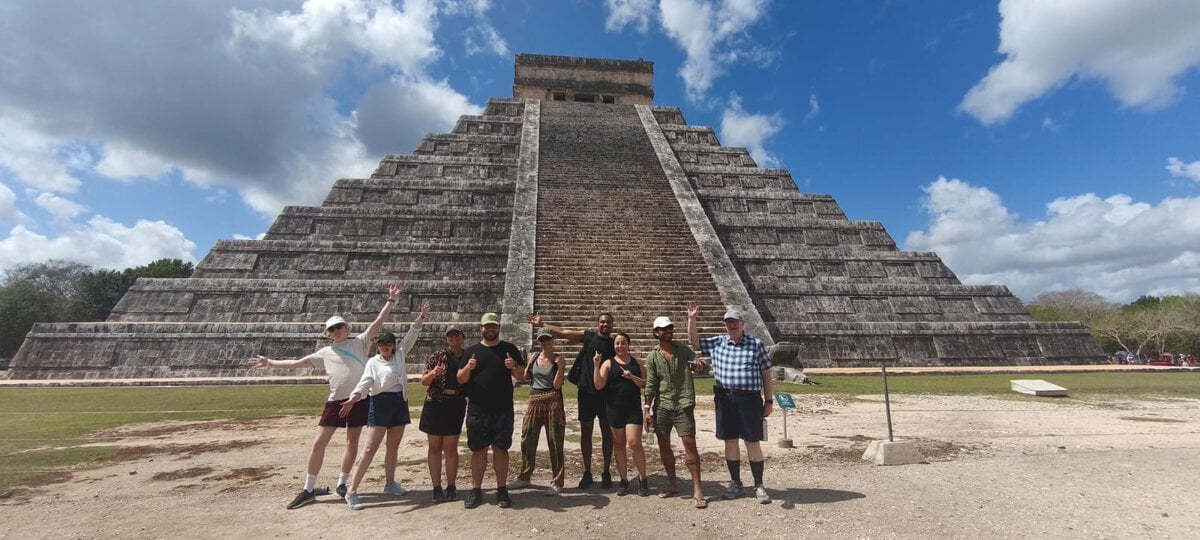
There’s a moment, walking the stone paths through the trees, when the plaza opens and the Pyramid of Kukulkan appears in front of you. It’s larger than the photographs suggest and more precise. The Maya didn’t build for spectacle alone. They built with an understanding of astronomy, geometry, and time that still impresses engineers today. Standing there, most guests go quiet for a few seconds. That silence is the real arrival.
What the Guide Shows You That You’d Miss Alone
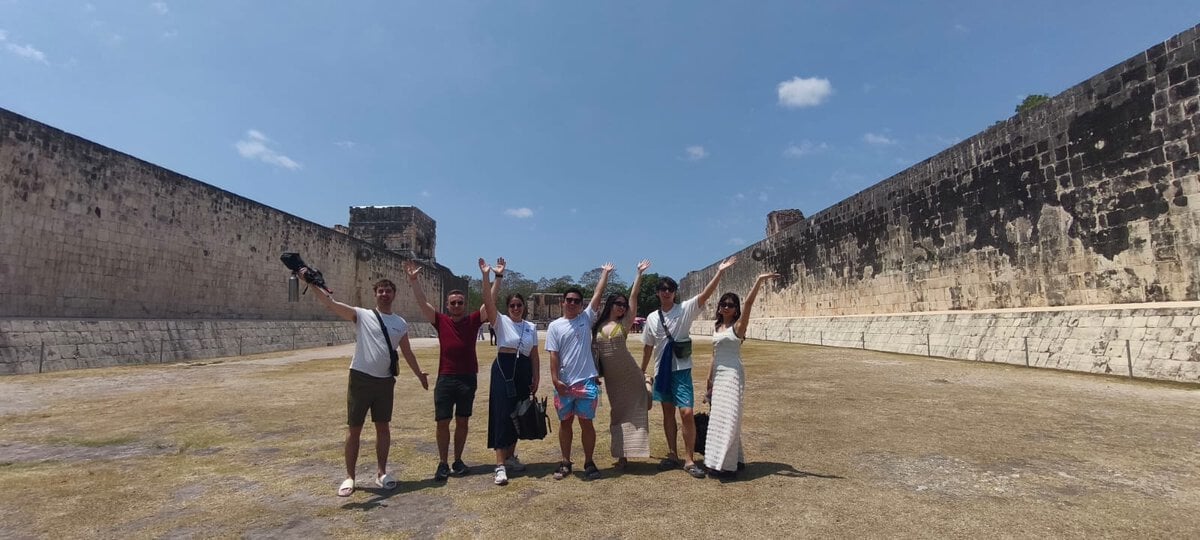
Our guide is a local storyteller with deep knowledge of Maya history, traditions, and Yucatecan culture. At the Great Ball Court, they don’t just describe what happened. They put you inside it. You start to hear, in your imagination, what this space sounded like when it was in use, and you begin to understand how Maya society organized itself around ceremony, competition, and cosmology.
The architectural details are where the depth really shows. The orientation of the structures, the acoustic properties of the plazas, the way light and shadow interact with stone at specific times of year — none of this is obvious without context. A small group makes it easier to ask questions, linger where something catches your attention, and follow the conversation wherever it leads.
Ma’alo’ob k’iin — “good day” in Yucatec Maya, the language still spoken across the peninsula — is a phrase that captures the spirit of approaching a place like this: with curiosity, respect, and a willingness to actually pay attention.
Valladolid: Colonial Mexico Over Lunch
A Different Kind of History
After the ancient city, the group drives to Valladolid. The change in atmosphere is immediate. Colorful façades line the streets, a central square anchors daily life, and the pace slows in the best possible way. This is colonial Mexico rather than pre-Columbian Mexico, and seeing both in one day gives each era more meaning by contrast.
Lunch in a Restored Courtyard
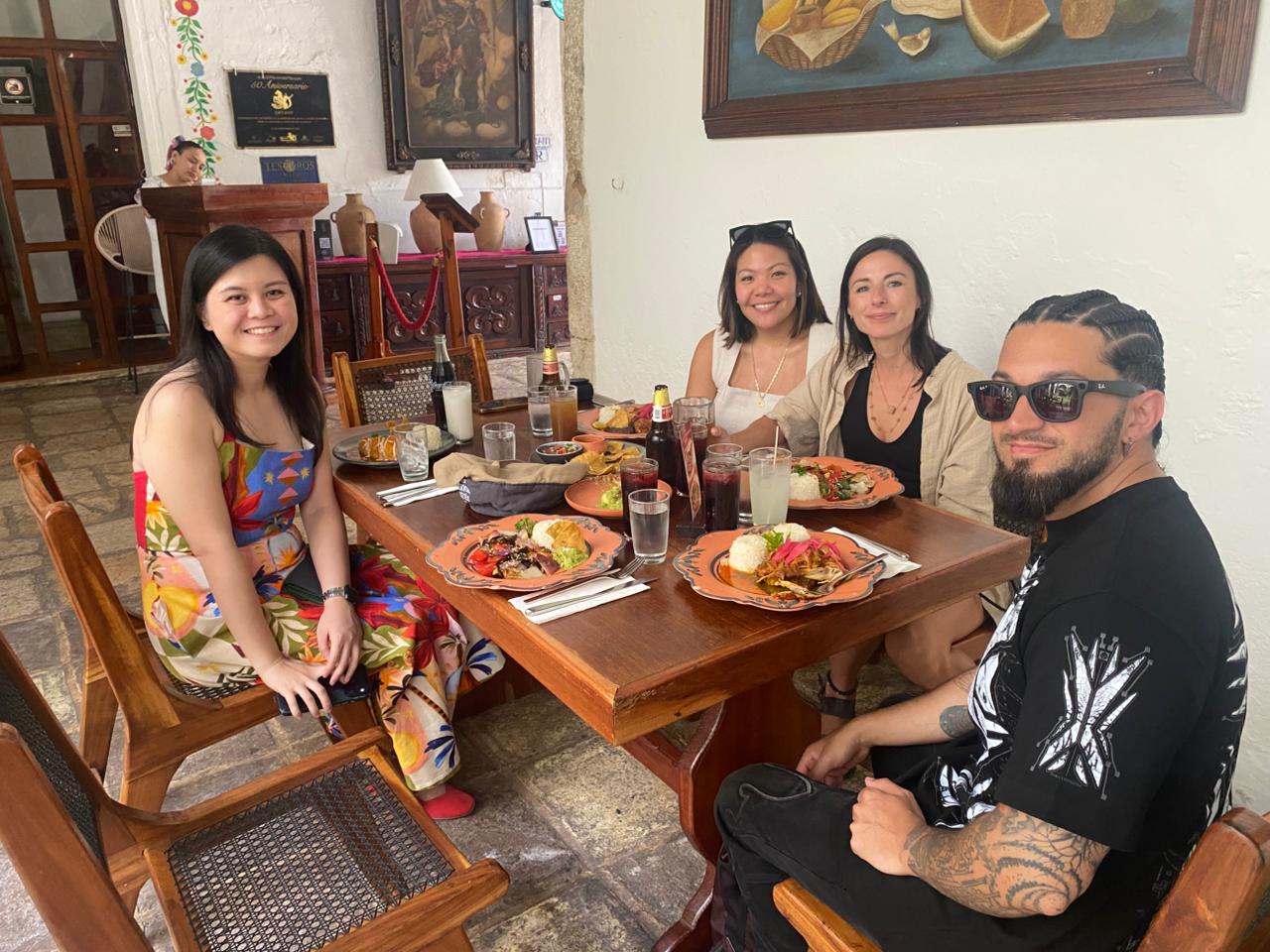
Lunch is served in the courtyard of a restored colonial mansion. The food is traditional: local spices, slow-cooked dishes, handmade tortillas, regional drinks. Eating here isn’t a break in the itinerary — it’s part of the story. The flavors connect to the land and the people in the same way that the guide’s stories connected you to the stones at Chichen Itza.
There’s also time to walk the streets, which is worth doing. Valladolid has a rhythm to it: voices, distant music, the easy movement of a town going about its afternoon.
The Cenote: The Part Nobody Expects to Love Most
Getting There
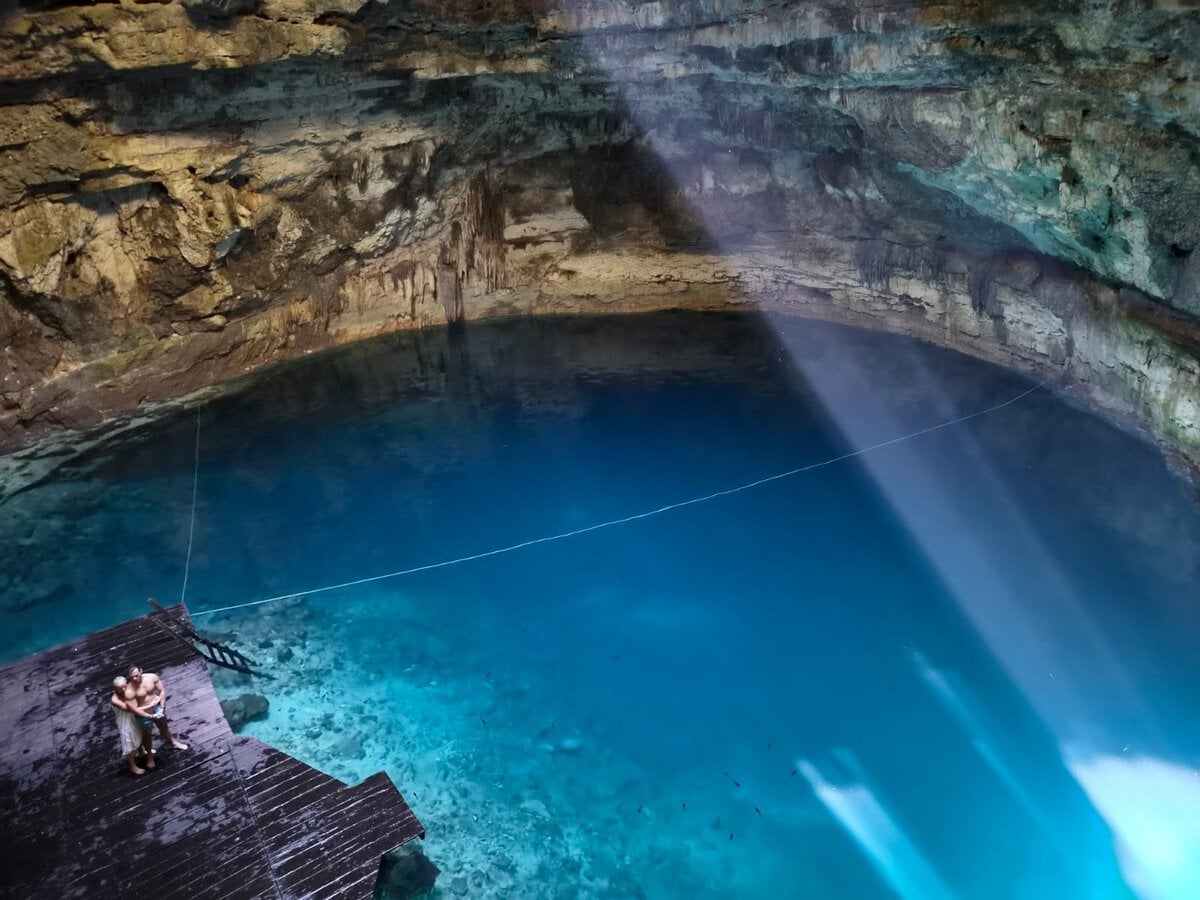
The afternoon road leads away from Valladolid and into a quieter community, farther from the tourist circuits. This cenote is community-run, which means the experience is genuinely local. The crowd level is a fraction of what you’ll find at the well-known sites, and the atmosphere reflects that.
In the Water
Guests often describe the walk to the cenote as pleasant but unremarkable, just trees and path and heat. Then they reach the edge.
The water is clear and blue, lit from above through the limestone. The air around it is noticeably cooler. Dripping water, echoes against the rock walls, the splash of someone slipping in — the sound alone tells you you’ve arrived somewhere worth arriving at.
Some guests swim. Others sit at the edge and take it in. There’s no pressure to do either, and there’s time for both. After a full morning of history and a long afternoon lunch, the cenote doesn’t feel like an add-on. It feels earned.
By the end of the day, many guests tell us the cenote was the surprise. They’d expected a quick swim. They found one of the most peaceful parts of the entire experience.
The Return to the Riviera Maya
The drive back traces the same roads in reverse, but the group is different from the one that left in the morning. The conversations on the return tend to be quieter, more reflective. Cameras are full. The pyramid is memorable. But so is the courtyard in Valladolid, the guide’s explanation of the ball court, and the color of the water in that cenote.
That combination — ancient history, living culture, local food, and a moment of genuine stillness in nature — is what a day tour from the Riviera Maya can actually be, when it’s built around understanding rather than just sightseeing.
Practical Information
Timing and Duration
This is a full-day experience, departing early from the Riviera Maya and returning in the late afternoon or evening. Chichen Itza is best visited in the morning before the heat peaks, so the early start works in your favor.
What to Wear and Bring
The Yucatán is warm and humid. Light, breathable clothing is practical throughout the day. Comfortable walking shoes are important for the uneven stone surfaces at Chichen Itza. For the cenote, bring a swimsuit and a towel. Having an umbrella and a hat make the open plazas at the archaeological site significantly more comfortable.
Group Size
Tours operate in small groups, which allows for a more personal experience with the guide and easier movement through the sites.
Photography
Every stop offers something worth photographing, from the scale of the pyramid to the details of Valladolid’s architecture to the light in the cenote. A wide-angle lens helps at Chichen Itza; at the cenote, low-light settings matter more than anything else.
Frequently Asked Questions
Is Chichen Itza worth visiting from the Riviera Maya, given the distance?
Yes, and the drive is part of the experience. The Yucatán interior looks and feels different from the coast, and arriving by road gives you a real sense of the region’s scale. Most guests find the journey out is part of what makes the day feel complete.
What level of physical fitness is needed for this tour?
The walking at Chichen Itza involves uneven stone paths and some open plazas in the sun, so a reasonable level of fitness helps. The pace in a small group allows for a more relaxed approach than a large bus tour, and there’s time to stop and rest as needed.
Can I climb the Pyramid of Kukulkan?
No. Climbing the pyramid has been prohibited for years to protect the structure. The guide’s role becomes especially valuable here, because understanding what you’re looking at matters far more than standing on top of it.
Community-run cenotes are typically managed by local families or villages rather than large tourism operators. They tend to be quieter, better maintained in a natural sense, and the revenue goes directly to the community. The experience feels more personal and less commercial.
Is this tour suitable for solo travelers?
The small-group format works particularly well for solo travelers. You’re sharing the experience with a handful of people rather than a crowd, and the guide’s storytelling creates a natural point of connection for everyone in the group.
What if I’ve already been to a cenote?
Cenotes vary enormously in character, accessibility, and atmosphere. A community-run cenote reached in the afternoon, after a full day of history and culture, offers a different experience than a cenote visited as a standalone activity in the morning. The contrast and the timing are part of what makes it memorable.